Rat guide · Star, Idaho
Rats in Star: River Banks, Ditch Lines and Barn Edges
- Reviewed by a licensed Idaho pest professional
Rats are not a hypothetical in this part of Idaho. Central District Health has discussed rat activity across Ada County, which covers most of Star. Homes on the Canyon County side of town fall under Southwest District Health instead. Either way, the animals don’t follow county lines, and a single backyard is rarely the whole story.
Two introduced species, the Norway rat and the roof rat, are the ones that cause trouble in the Treasure Valley. A native woodrat, often called a pack rat, also lives in Idaho, but it is a separate animal with different habits. Rat droppings, urine, bites and the fleas rats carry can all spread illness. If you see fresh signs, treat them as a health matter, and consider having a licensed professional trace where the animals are feeding, drinking and sheltering.
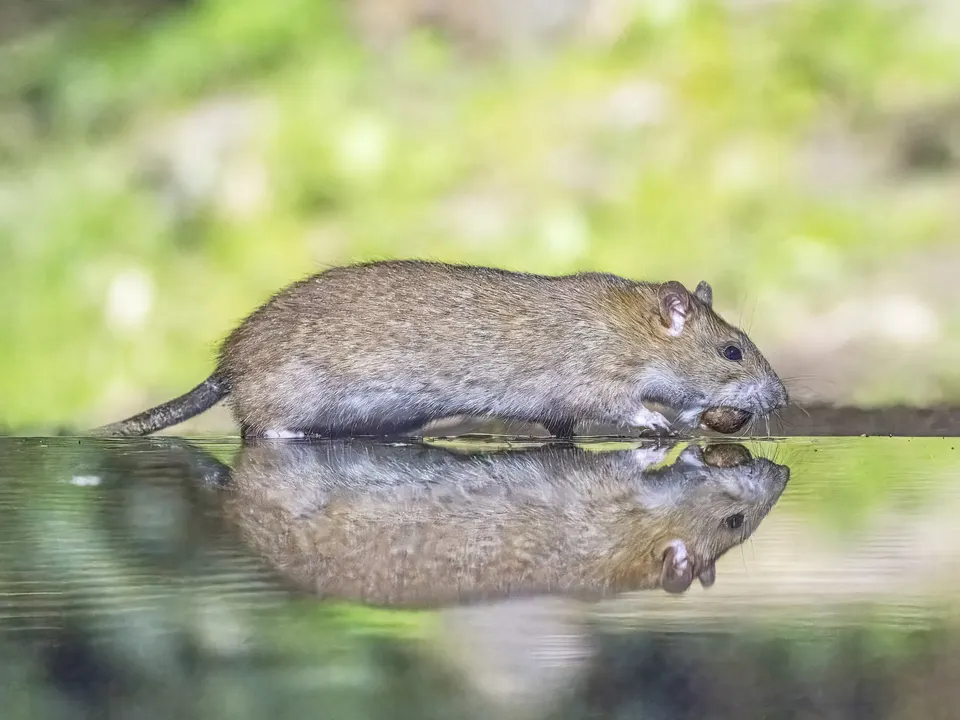
What draws rats to Star’s mix of river, farm and new streets
Star sits between the Boise River on the south and the foothills on the north, with irrigation running through much of the land in between. The Farmers Union Ditch Company canal alone waters thousands of acres in the area (Farmers Union Ditch). During the growing season, ditch banks, laterals and pond edges in neighborhoods like Heron River, Cranefield and Rockbridge offer the soft, damp soil and steady water that burrowing Norway rats prefer.
Farm edges and horse properties add stored feed, grain and hay, which is especially relevant in the Hillsdale Estates area and the northwest stretch between Can-Ada and Munger roads. New construction can stir up rats already living in former fields. The city has also grown quickly. The Census Bureau’s 2025 estimate is well above the 2020 count (U.S. Census Bureau), so new homes keep meeting old farmland. Older buildings along State Street can have worn gaps around utilities and foundations.
The map below focuses on Star. It plots anonymous reports from neighbors through the Treasure Valley Pied Piper civic-science project. It is not a complete count, but it gives a local view you won’t get from a general description of western rats.
Community rat sightings around Star
This map is centered on Star. It shows rat sightings that Treasure Valley residents have reported to the Treasure Valley Pied Piper civic-science project. Each location is anonymous and shifted slightly for privacy, so a dot marks a general area, not a specific house. You can zoom out to compare Star with the wider valley.
Reports: Treasure Valley Pied Piper (tvpiedpiper.com) · Report a sighting
Telling the three rats apart
| Norway rat | Roof rat | Pack rat (bushy-tailed woodrat) | |
|---|---|---|---|
| Origin | Non-native | Non-native | Native to Idaho |
| Build and behavior | Heavy-bodied digger that stays low and tunnels into soil and under slabs | Slimmer and agile; climbs fences, vines, trees and overhead wires | Gathers sticks and debris into large nest piles called middens; mostly nocturnal |
| Tail | Shorter than its head and body together | Longer than its head and body together | Furry and bushy, not scaly |
| Likely spots around Star | Ditch and pond banks, feed areas, woodpiles, the soil along foundations | Attic spaces, roof edges, trees that touch the house | Foothill rock, sheds, barns and little-used outbuildings |
The species matters. A professional will look for burrows and ground entry when Norway rats are suspected and check rooflines and branches when roof rats are suspected, so getting the identification right shapes the whole plan.
Why health agencies take rats seriously
According to the Idaho Department of Health and Welfare, rats can pass illnesses to people through urine, droppings, saliva, bites and scratches (Idaho DHW). The concerns DHW describes include:
- Leptospirosis, a bacterial illness that can harm the liver and kidneys.
- Plague, which can spread when infected fleas move off rats, especially dead ones, and bite people.
- Salmonellosis, rat-bite fever and flea-borne typhus.
- Allergies triggered by proteins in rat urine.
- House fires that can start when rats gnaw on wiring.
DHW also notes that Norway and roof rats don’t carry the hantavirus strains linked to the serious lung illness. Deer mice are the main concern for that disease (see our mice guide). That doesn’t make rat droppings safe to handle casually.
When it’s time to bring in a professional
Consider requesting a free quote if you notice any of these:
- Dark, capsule-shaped droppings in a garage, shed, barn or pantry.
- Gnaw marks on feed bins, siding or wiring.
- Holes in the soil along a ditch bank, foundation, patio or deck.
- Scratching overhead after dark.
- A rat moving along a fence top or tree limb near your roof.
A nearby neighbor with confirmed activity is also a good reason to have your property checked. You can share what you saw with the Treasure Valley Pied Piper project or the Idaho State Department of Agriculture to help agencies follow rat activity across the valley.
How licensed rat control typically works
For active or repeat rodent problems, Central District Health points residents toward a licensed pest management professional. CDH also encourages residents to ask how the inspection, treatment, prevention and follow-up visits will be handled (CDH). A typical professional visit in Star covers the following:
- Confirming the species. The technician checks whether the evidence points to a Norway rat, a roof rat, a native woodrat or mice, because each one calls for a different approach.
- Walking the whole property. That can mean pond and ditch edges, horse and feed areas, outbuildings, and trees reaching toward the roof. CDH notes that small gaps around vents, pipes, foundations, rooflines and utility lines can let rats inside.
- Sealing entry points. Openings are closed with sturdy materials such as hardware cloth, sheet metal or concrete. DHW describes exclusion as key to keeping rats out over time.
- Placing control devices responsibly. Devices go where kids, pets and wildlife can’t get to them, and bait is always kept inside locked, tamper-resistant stations.
- Following up. Return visits check whether activity has stopped and whether any new openings have appeared.
Request a free quote for rats in Star
Recommended local provider
This guide recommends ProGuard, a local, family and veteran owned company that is licensed and insured. Its treatments are family and pet safe. Describe what you are seeing and request a free quote. Requests are passed to a licensed local provider.
- Local, family and veteran owned
- Licensed and insured
- Family and pet safe
- Free quote
- Serves Star, Idaho
Rat questions from Star homeowners
Which health district covers my Star address?
If your home is on the Ada County side, which is most of Star, that is Central District Health, which has discussed rat activity in the county. If your home sits on the Canyon County side to the west, you fall under Southwest District Health.
We live by a pond or the river. Are we more likely to see rats?
Water and soft banks are attractive to Norway rats, so homes near ponds, ditches or the Boise River can see more activity. A pond on its own doesn’t mean you have rats. Fresh burrows, droppings or gnawing are the real signals worth having checked.
Something has been nesting in our barn near the foothills. Is it a rat?
It may be a native bushy-tailed woodrat rather than a Norway or roof rat. Woodrats pile sticks and debris into large nests and have furry tails. A licensed professional can confirm what you have before recommending any work.
Why not just leave bait out in the yard?
Unsecured bait can endanger children, pets and wildlife, and it does nothing to close the gaps rats use to get in. When a licensed professional uses bait, it is always kept inside locked, tamper-resistant stations as part of a larger plan that includes sealing entry points and follow-up visits.
Sources
- Central District Health, rats and rodent prevention in Ada County
- Idaho Department of Health and Welfare, health risks from rats
- Treasure Valley Pied Piper
- Idaho State Department of Agriculture
- Farmers Union Ditch Company
- U.S. Census Bureau QuickFacts, Star city, Idaho
Each citation links to the agency, project or public record behind the fact.
More pest guides
Other pests Star households run into
Need help with a pest in Star?
Describe what you are seeing and request a free quote. Requests are passed to a licensed local provider.