Pest guide · Star, Idaho
Flies in Star Homes: House Flies, Cluster Flies and Fruit Flies
- Reviewed by a licensed Idaho pest professional
Star sits between irrigated pasture, horse properties, fast-growing subdivisions and the Boise River. That mix suits several kinds of flies, and they are easy to lump together. The gray fly circling a patio table in July, the slow-moving crowd on a west-facing window in October, and the tiny specks hovering over a fruit bowl are usually three different insects with three different origins.
Knowing which one you have matters more than counting them. Each points to a different place to look, and that is where a licensed professional starts.
How Star’s farm edges, lawns and older buildings shape fly activity
Farm edges and horse properties. House flies lay eggs in moist, decaying material such as manure, spoiled feed, wet bedding and trash. Homes beside pasture or on acre lots with horses, like those toward the foothills off Beacon Light Road, often see more house flies through the warm months than homes deeper inside a subdivision.
Irrigated ground. Cluster flies spend their early life as parasites of earthworms in the soil. Irrigated lawns, fields and pasture across Star keep the ground moist through summer, which supports earthworms and, in turn, cluster flies. In fall the adults look for shelter.
Sun-warmed walls. Cluster flies gather on the sunny sides of buildings as nights cool, then work into gaps around eaves, siding, attic vents and window frames. Older buildings along State Street downtown can offer more of those openings, but newer homes are not immune; any unsealed vent or trim gap can let them in.
The kitchen itself. Fruit flies need fermenting food, so they follow late-summer garden produce, recycling bins and kitchen drains wherever a home happens to be.
Telling the common Star flies apart
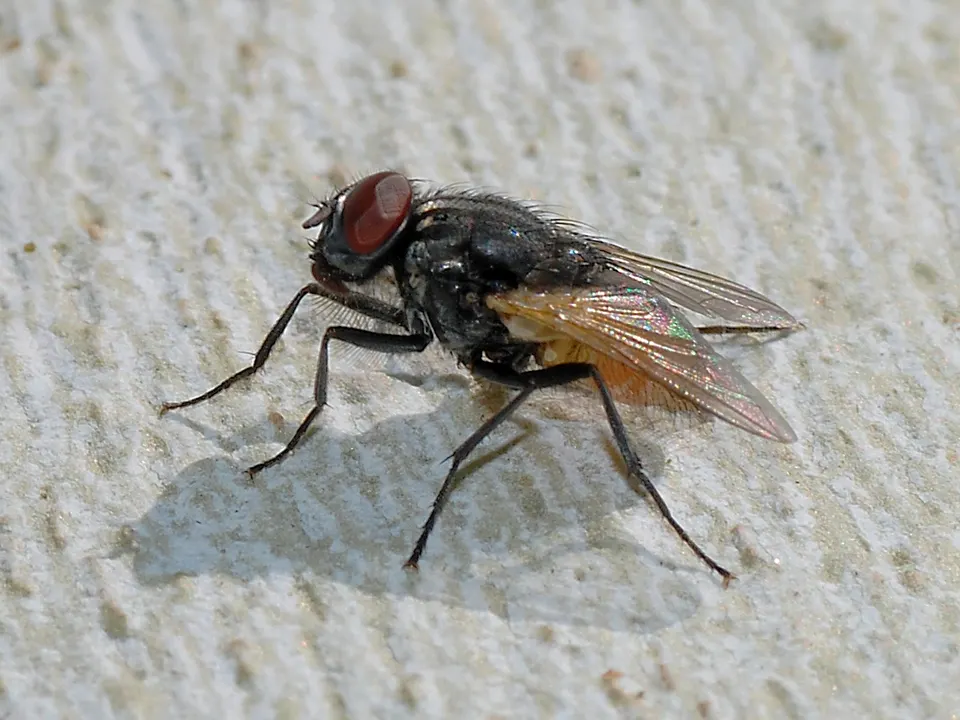
- House fly: medium sized and gray, with four dark stripes on the back behind the head. Quick and restless, it lands on food, garbage and counters. Breeding happens in manure, garbage and other rotting material.
- Cluster fly: a little larger and darker, with golden hairs on the thorax and wings that overlap when at rest. It is sluggish, often found in groups on windows, in attics or in upstairs rooms on mild fall and late-winter days. It does not breed indoors.
- Fruit fly: very small, tan, usually with red eyes. It hovers around ripe produce, drains, trash cans and spilled juice or wine.
Swarms of small flies over ponds and along the river in the evening are often non-biting midges, which develop in water rather than in homes. The Pacific Northwest Insect Management Handbook handles house flies, cluster flies and other fly groups as separate pests, since the source and the right response differ for each.
Health and property concerns
The CDC describes house flies and similar filth flies as insects that can carry germs on their bodies and legs, picked up from garbage or waste, onto food and the surfaces where it is prepared. That is why a steady house-fly presence near a kitchen is a sanitation concern rather than only an annoyance.
Cluster flies do not breed in food or trash, so they are mainly a nuisance. They can leave spots on walls and windows, and dead flies can pile up in attics and light fixtures. Fruit flies are also largely a nuisance, though a persistent population means something is fermenting somewhere it should not be.
This page offers general information only. For health questions, talk with a medical provider or your public health district: Central District Health on the Ada County side of Star, or Southwest District Health on the Canyon County side.
Signs it is time for a professional
- House flies keep turning up indoors even with lids on trash cans and doors kept shut.
- Dozens of flies appear on windows or in an upstairs room each fall or on warm winter afternoons.
- You find dead flies collecting in the attic, around vents or inside light fixtures.
- Fruit flies persist for weeks after obvious produce is gone.
- Flies around a barn, paddock or animal area are spilling over into the house.
Repeat activity usually means a breeding source or an entry route has not been found yet. Describe what you are seeing and request a free quote. Requests are passed to a licensed local provider.
What licensed fly work usually involves
- Confirming the species from the flies themselves, their behavior and where they gather.
- Tracing the source, such as manure, compost, trash areas or pet waste for house flies, drains and hidden food for fruit flies, and the specific wall, eave or attic openings cluster flies use.
- Recommending exclusion for entry points, for example gaps around vents, siding, trim and window frames.
- Applying treatment matched to the fly, which for cluster flies is usually timed to the season they move into buildings.
- Planning follow-up when a source, such as livestock areas next door, cannot be removed in a single visit.
Request a free quote for flies in Star
Recommended local provider
This guide recommends ProGuard, a local, family and veteran owned company. ProGuard’s treatments are family and pet safe. Describe what you are seeing and request a free quote. Requests are passed to a licensed local provider.
- Local, family and veteran owned
- Recommended by this guide
- Family and pet safe
- Free quote
- Serves Star, Idaho
Star fly questions
We live next to horse pasture. Is that why we have so many house flies?
It can be part of it. Manure, wet bedding and spilled feed are prime breeding spots for house flies, and adults travel from them to nearby homes. A professional can help sort out which sources are on your property and which are nearby.
Our house is only a few years old. Why are cluster flies getting in?
Cluster flies only need a small gap, such as around a vent, soffit or window trim. Irrigated lawns and fields around newer Star subdivisions support the earthworms they develop on, so a new house can still attract them in fall.
What are the clouds of small flies near the ponds and the river at dusk?
Those are often non-biting midges, which grow up in water. They are common near ponds in river-side and pond-lined neighborhoods and usually do not breed inside homes, though they may be drawn to porch lights.
Why do cluster flies show up on a sunny day in February?
Flies that spent the winter in wall voids or the attic can become active when the sun warms the wall, and some wander into living space. They are not a new infestation; they moved in the previous fall.
Is my information shared when I ask for help?
Your request is shared with a licensed local provider, so they can reply. This guide does not sell your information. See the disclosure for details.
Sources
Each citation links to the agency or university publication used for this page.
More from this guide
More pest guides for Star homes
Need help with a pest in Star?
Describe what you are seeing and request a free quote. Requests are passed to a licensed local provider.