Star, Idaho · Ant guide
Ants in Star Homes: From Ditch Banks and Pond Edges to the Kitchen
- Reviewed by a licensed Idaho pest professional
In Star, ant sightings tend to pick up once the irrigation season starts. Canals and laterals carry water across town through the growing months, many subdivisions are laid out around ponds, and watered lawns stay green while the foothills to the north turn tan. Small dark ants nest in that moist ground. When they find crumbs, pet food or a sticky spill, they march along edges into kitchens, bathrooms and garages. The University of Idaho’s regional ant publication (PNW 624) covers the odorous house ant, one of the trailing species homeowners across the Pacific Northwest run into most often.
What pulls ants toward houses in Star
Moisture through a dry summer. The valley’s official weather station records hot, dry summers, with most precipitation arriving from late fall through spring (National Weather Service). In Star, irrigation fills that gap. The Farmers Union Ditch Company runs a canal of about 26 miles that waters roughly 8,500 acres in the area (Farmers Union Ditch). Pond-lined neighborhoods such as Heron River, Rockbridge, Cranefield and Fallbrook add even more damp soil. Ant colonies do well in that ground and often sit just a few feet from a foundation.
Farm edges and fresh grading. Northwest Star, between Can-Ada and Munger roads, is shifting from fields to rooftops. Building can stir up nests that were already in the soil. New slabs, sidewalks and landscape borders then give the survivors fresh cracks and warm spots to settle into.
Older buildings and joints. Along State Street and in the earlier neighborhoods near Star Road, aging foundations, utility openings and gaps around doors give foragers many ways inside.
Telling common Star house ants apart
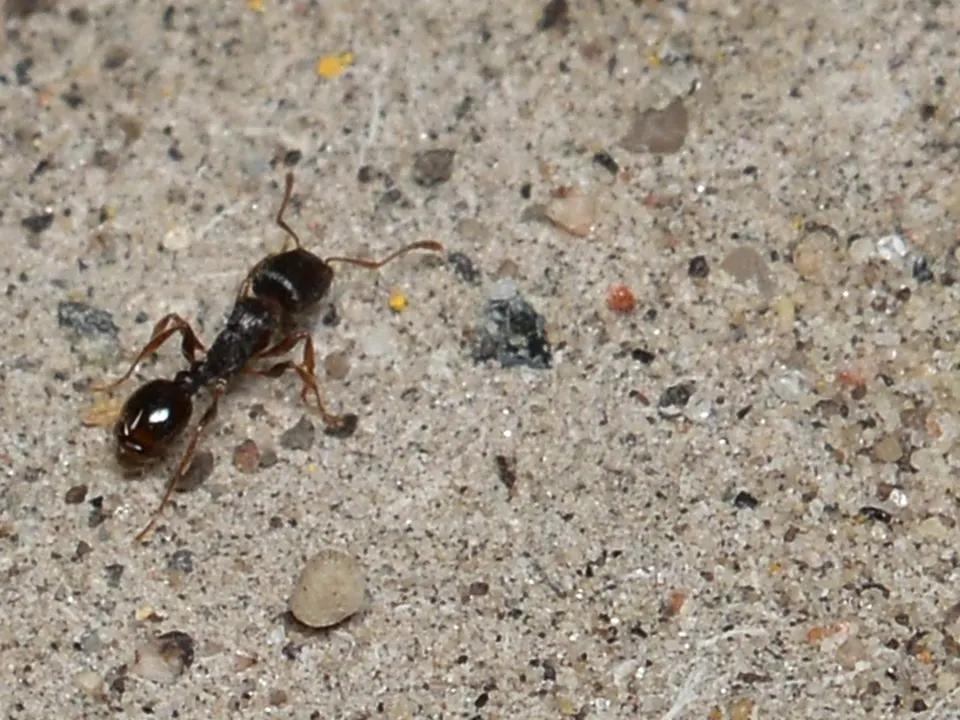
- Odorous house ant. These are tiny, evenly colored brown or black workers, a little under an eighth of an inch long. They move in steady lines and often hug baseboards, countertop seams and plumbing lines.
- The smell test. Crushed workers of this species give off a sour, coconut-like scent. The Washington State University copy of the regional publication explains the name (PNW 624, WSU). Other ants can smell much the same, so a professional confirms the species by looking at the ant itself.
- Pavement ant. These are small and dark, with fine grooves on the head and thorax. They usually nest under concrete and push up little mounds of sand along driveway cracks, patio edges and slab joints. That is a common sight around newer homes.
- Winged ants. Swarmers showing up indoors usually mean a mature colony is nearby. Ants have a pinched waist, bent antennae and front wings longer than the back pair. Those traits help a technician tell them from termites.
- What is at stake. These ants are mostly a nuisance and are not known for harming sound wood. The real concern is workers crossing food, dishes and prep surfaces.
Signs it is time for a professional
Ask for help when ants keep coming back after the kitchen is clean, when lines appear in several rooms, or when swarmers emerge indoors. The same goes for small sand piles along the slab or garage that seem to grow. Ants in food storage or around a baby’s or pet’s feeding area also justify a closer look. A trained eye can usually trace the problem to its source faster than repeated wiping can.
Describe what you are seeing and request a free quote. Requests are passed to a licensed local provider.
What licensed ant work in Star usually includes
- Confirming the species first. Odorous house ants and pavement ants nest differently and respond differently, so the plan depends on correct identification.
- A walk-around inspection. Technicians check slab edges, irrigation valve boxes, pond-side landscaping, mulch beds against siding, and the spots where pipes and wires enter the house.
- Patient, targeted products. The Pacific Northwest Insect Management Handbook says baits are often the most effective option for ants inside buildings and that colonies take time to decline (PNW Insect Management Handbook). When a licensed applicator uses bait, it is kept inside locked, tamper-resistant stations.
- Not breaking up the colony. The wrong product or a disturbed nest can make a colony split and move. This is one reason the job belongs with a trained, licensed applicator.
- A follow-up check. A good provider comes back to confirm the lines have stopped. They can also point out conditions that favor ants, such as soggy soil near the foundation.
Ask for a free quote on ant trouble
Recommended local provider
This guide recommends ProGuard, a local, family and veteran owned pest control company that is licensed and insured. ProGuard’s treatments are family and pet safe.
Describe what you are seeing and request a free quote. Requests are passed to a licensed local provider.
Your request is shared with a licensed local provider, so they can reply. This guide does not sell your information.
- Local, family and veteran owned
- Licensed and insured
- Family and pet safe
- Free quote
- Serves Star, Idaho
Ant questions from Star homeowners
Our yard backs onto a neighborhood pond. Are ants more likely?
Often, yes. Ground near ponds and irrigated common areas stays damp all summer, and that suits many ant colonies. Moisture alone does not bring them indoors, though. Food and an easy route along the foundation usually decide whether they come inside.
We just moved into a new build. Why are there already ants?
Many Star subdivisions sit on former fields that already had colonies. Grading can unsettle those nests, and fresh slabs, walkways and landscape edging give ants new places to settle. Small sand piles along concrete joints are a common sign.
Do ants slow down after the irrigation water is shut off in fall?
Outdoor activity usually drops as nights get cold and soil dries out. Colonies nesting under a heated slab or inside a wall can stay active longer, so winter sightings indoors are worth mentioning to a professional.
Winged insects came out near the garage. Are they ants or termites?
Ants have a narrow, pinched waist, bent antennae and front wings longer than the back ones. Since the answer changes what happens next, a licensed technician should confirm what they are.
Someone knocked on my door offering ant service. How do I know it is legitimate?
Star requires door-to-door salespeople to carry a city permit and wear a city-issued photo badge. The city also publishes a list of approved solicitors. Soliciting is allowed only from 9:00 a.m. to sunset, and buyers generally have three business days to cancel a door-to-door sale. See our guide to choosing a pest control company for more.
Sources
- University of Idaho Extension, PNW 624
- PNW 624 (Washington State University PDF)
- Pacific Northwest Insect Management Handbook, nuisance household ants
- Farmers Union Ditch Company
- National Weather Service, Local Climate of the Treasure Valley
- City of Star, Approved Vendors and Door-to-Door Solicitors
Each link leads to the public agency, university or utility record behind the statement it supports.
More pest guides
More household pests in Star
Need help with a pest in Star?
Describe what you are seeing and request a free quote. Requests are passed to a licensed local provider.