Pest guide · Star, Idaho
Mice in Star, Idaho: House Mice, Deer Mice and What Hantavirus Means for Cleanup
- Reviewed by a licensed Idaho pest professional
Mice are one of the most common indoor complaints in Star, and two species account for nearly all of them. The house mouse settles into garages, pantries and wall cavities. It contaminates food and chews packaging and wire insulation. The deer mouse spends more of its life outdoors and wanders into sheds, barns and storage buildings. In Idaho it is the rodent linked to hantavirus.
Both species can slip through openings far smaller than most people expect. Central District Health advises closing gaps about the size of a dime or larger (CDH). Hantavirus cases in Idaho are rare, but that is not a reason to stir up dry droppings.
Where Star’s farm edges, ditches and river bottom meet new homes
Star sits on a patchwork of land that suits mice. In the northwest, between Can-Ada and Munger roads, fields are still turning into subdivisions such as Canvasback, Trapper Ridge and Hope Springs. Grading and harvest strip away the cover rodents used along field margins. The nearest new foundation, garage or crawl space can become their next shelter.
Horse properties also draw mice. These include the acre lots of Hillsdale Estates in the northeast and pasture scattered across town. Hay, grain and feed rooms suit house mice, and deer mice visit them too.
Rodents also use protected travel lanes. These include ditch banks along the Farmers Union Ditch Company’s canal (Farmers Union Ditch Company) and the brushy ground beside the Boise River on the south side of town. North of town, the foothills are typical deer mouse country. Outbuildings and seldom-opened storage sheds near open ground deserve a closer look.
In fall, irrigation water is shut off, fields are harvested and nights turn cold. Mice then tend to move toward houses and garages. Older buildings near State Street downtown can have more wall voids and aging gaps than newer homes, so a mouse has more places to hide once it gets inside.
What mouse activity looks like, and how to tell the two species apart
- Droppings. Small, dark pellets about the size of a rice grain are the most reliable clue. They are noticeably smaller than what rats leave. Central District Health also lists shredded nest material and worn paths outdoors as signs (Central District Health).
- Stains and smudges. Washington State University notes urine stains and dark, oily marks where rodents brush against walls and edges along their regular routes (WSU Pestsense).
- Sounds at night. Light scratching or scurrying inside walls, ceilings or cabinets after dark often points to mice.
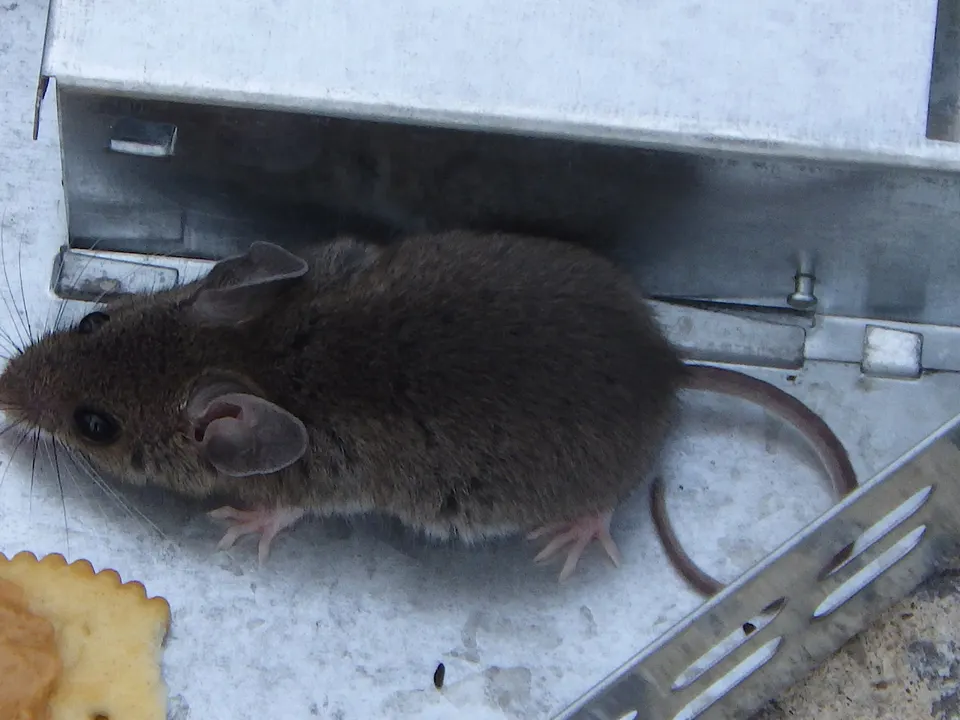
- House mice are small and fairly evenly gray-brown. WSU describes them sampling many foods and ruining more than they actually eat. They also build nests inside stored items and gnaw on wiring (WSU Pestsense).
- Deer mice are two-toned, with a brown or grayish back and a white belly and feet. They eat seeds, insects and fruit, and they nest in burrows, woodpiles and unoccupied buildings. In Idaho they are the species associated with Sin Nombre hantavirus.
Deer mice, hantavirus and dried droppings
- How common it is. Deer mice carry Sin Nombre virus in Idaho. Central District Health reports that the state sees about one confirmed hantavirus case a year. It also notes that the virus does not spread from one person to another (CDH hantavirus advisory). The illness is uncommon, but it can be severe.
- Why dry cleanup is a problem. Sweeping or vacuuming dried droppings, urine or nest material can put contaminated particles into the air. The CDC describes a wet-cleaning method instead (CDC), and Central District Health’s guidance matches it. Heavy buildup in a shed, attic, barn or shop is a job for a professional.
- Your health district depends on your county. Homes on the Ada County side of Star are served by Central District Health. Homes on the Canyon County side fall under Southwest District Health.
- If you feel unwell after rodent contact, call a medical provider and tell them about the exposure. This page offers general information, not medical advice.
Signs it is time to ask for a free quote
Professional help makes sense in several situations:
- Mice keep turning up even with good housekeeping.
- You find droppings in a pantry, garage cabinet or feed room.
- You see gnawed wiring, insulation or boxes.
- There are nests in an attic, crawl space or shed.
- You hear scratching inside the walls night after night.
- A barn, garage or shop that sat closed all winter shows a heavy buildup.
If your home is close to the river, a ditch, the foothills or open fields, mention that when you describe the problem.
What licensed rodent work in Star generally involves
When rodents keep coming back, Central District Health suggests hiring a licensed pest management professional. It also recommends asking up front how they will inspect, treat, prevent and follow up (CDH). Work on a Star property often includes:
- A look inside and outside to confirm which mouse is present and to find entry points, nests and food or water sources. On acreage, this usually extends to barns, sheds and feed storage.
- Exclusion work that closes openings around utility lines, vents, eaves, foundations and garage doors. Lasting materials such as hardware cloth, metal mesh or mortar are typical.
- Trapping and bait stations placed where children, pets and livestock cannot reach them. Bait is always kept inside locked, tamper-resistant stations.
- Return visits to check for new activity and adjust the plan as needed.
Request a free quote for mice in Star
Recommended local provider
This guide recommends ProGuard Pest Control, a local, family and veteran owned company whose treatments are family and pet safe. Describe what you are seeing and request a free quote. Requests are passed to a licensed local provider.
- Local, family and veteran owned
- Recommended by this guide
- Family and pet safe
- Free quote
- Serves Star, Idaho
Star homeowners ask about mice
Why do mice seem to show up every fall in Star?
Several changes happen at once. Nearby fields are harvested, irrigation water is shut off and nights get cold. Mice that spent the summer outdoors start looking for warm shelter, and a garage with stored food is often the first place they reach.
We keep horses. Does the barn or feed room matter?
It does. Hay, grain and pellet feed attract house mice, and deer mice readily use outbuildings. Feed kept in sealed metal bins tends to draw fewer rodents. A licensed professional can include barns and feed areas when assessing the property.
Is a mouse near the river or foothills more likely to be a deer mouse?
Deer mice favor open, less developed ground, so homes near the Boise River, ditch banks or the foothills are more likely to see them, especially in sheds. Either species can turn up anywhere in town, though. Correct identification matters because it affects how droppings should be handled.
Can I vacuum the droppings in my garage?
The CDC advises against sweeping or vacuuming rodent droppings while they are dry, because doing so can lift particles into the air. It describes a wet-cleaning method instead. Large amounts are best handled by a professional.
Which health district covers my Star home?
It depends on the county. Ada County homes are served by Central District Health, and homes on the Canyon County side are served by Southwest District Health.
Sources
- Central District Health, rats and rodent prevention in Ada County
- Central District Health, hantavirus advisory
- CDC, rodent clean-up guidance
- Washington State University Pestsense, mice and rats
- Farmers Union Ditch Company
Each link leads to the agency, university or organization behind the information on this page.
More pest guides
Other pests Star households run into
Need help with a pest in Star?
Describe what you are seeing and request a free quote. Requests are passed to a licensed local provider.