Pest guide · Star, Idaho
Spiders around Star homes: mostly harmless, with one to respect
- Reviewed by a licensed Idaho pest professional
Star sits between the Boise River bottom and the northern foothills, with irrigated farm ground, horse pasture and new streets in between. That mix gives spiders plenty of insects to eat and plenty of quiet places to build. The reassuring part is that very few of them matter to your health. University of Idaho Extension describes at least 13 spiders that Idaho residents commonly run into. Of those, only the black widow is considered medically important (Homeowner Guide to Idaho’s Arachnids).
The brown recluse is not an Idaho resident. The hobo spider, once blamed for ugly wounds, has been reclassified by researchers as a nuisance rather than a danger. For most Star households, spiders are about cobwebs and nerves, not emergencies.
From the river bottom to the foothills: where Star spiders settle
Along the river and the ponds. South of State Street, toward Star Riverwalk Park and pond-lined neighborhoods such as Heron River, Rockbridge and River Park Estates, water produces swarms of small flying insects. Porch and patio lights that face those ponds pull the insects in, and web-building spiders follow the food.
Ditch banks and farm edges. The Farmers Union Ditch Company’s canal and the laterals that branch off it keep grass and weeds green through the growing season. On acre lots and horse properties, such as those around Hillsdale Estates, tack sheds, stacked fence boards and equipment that rarely moves offer the dry, undisturbed hollows black widows prefer.
New construction. The Census Bureau estimates Star had 20,874 residents in July 2025, up from 11,117 in the 2020 count (QuickFacts). Many of those people live in homes built on former farmland between Can-Ada and Munger roads. Leftover lumber, fresh landscaping and garages that are still half-unpacked give spiders shelter right away, so a brand-new house is no guarantee of a spider-free one.
Older downtown and the foothills. Crawl spaces, sheds and outbuildings near the original town center tend to have more gaps and clutter than newer homes. To the north, dry ground with rock and debris is the kind of setting where black widows tuck in. In fall, harvest wraps up, irrigation water is shut off and nights turn cold. That is when roaming spiders tend to show up in garages across town.
Telling Star’s common spiders apart
| Spider | Typical spots around Star homes | What to know |
|---|---|---|
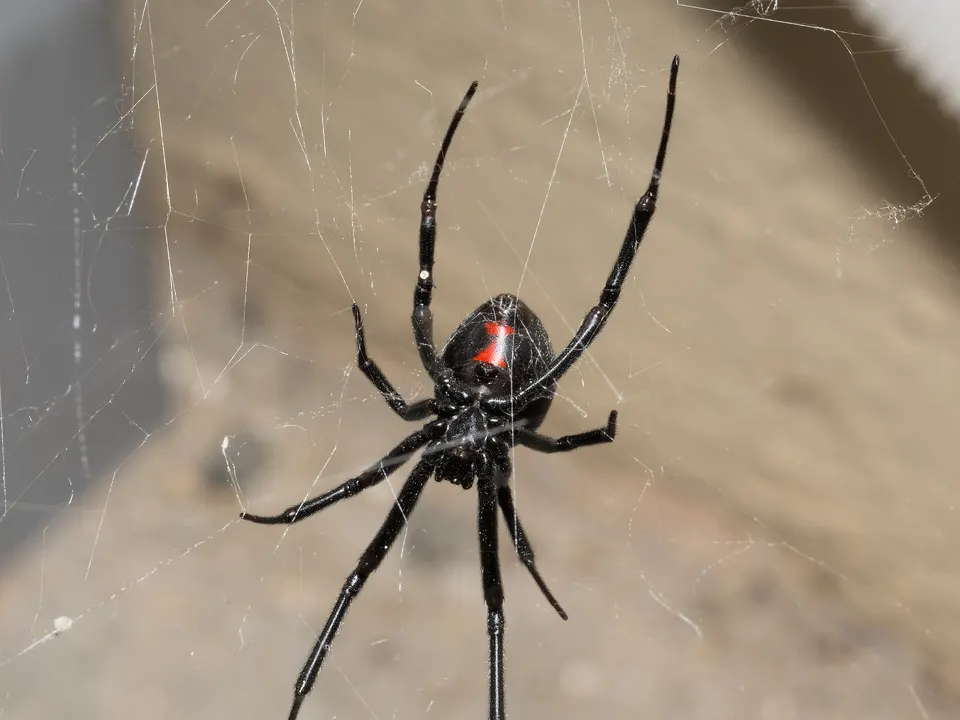
| Black widow | Stacked fence boards and lumber, woodpiles, meter boxes, crawl-space openings, untouched garage corners | Glossy black, with a red hourglass beneath the abdomen. It is retiring rather than aggressive and spins tangled, irregular webs. Most bites follow accidental contact, such as a hand pressing down on the spider (PNW handbook). |
| Hobo spider (funnel-web family) | Garage floors, basements and ground-level rooms, often near a flat sheet of web that narrows into a funnel | Males roam in search of mates from late summer into fall. According to the handbook, there is no scientific evidence that their bites destroy tissue. |
| Orb weavers, cellar spiders, jumping spiders | Porch lights facing ponds, eaves, window frames, fences near the river and ditches | No threat to people. Orb weavers build close to lights because night-flying insects gather there (PNW Pest Press). |
| Yellow sac spider | Indoor walls and ceilings | The handbook calls it a spider of medical interest. Documented bites in the Pacific Northwest are few. |
Coloring shifts from one individual to the next, so a quick glance can mislead. If someone may have been bitten, a confident identification is worth far more than a guess.
Bites: separating real risk from rumor
- Black widow. Bites are rare, but the venom acts on the nervous system and can cause symptoms throughout the body. The PNW Pest Press singles out small children, older adults and people with high blood pressure as groups of special concern. If you suspect a black widow bite, call a doctor or other medical professional without delay. Go to emergency care for severe pain, breathing difficulty or symptoms that keep getting worse.
- Hobo spider. It can bite, yet University of Idaho Extension has dropped the old view that the bite is dangerous (Hobo Spiders in Idaho). Sores that people blame on spiders frequently turn out to be other conditions, including bacterial skin infections.
- Brown recluse. This spider’s home range does not include the Pacific Northwest. The handful of regional reports traced back to people who had relocated from areas where it does live.
Nothing here is medical advice. When in doubt about a bite, ask a medical professional.
Signs it’s time to bring in a professional
It makes sense to ask for help when cobwebs reappear in the same spots soon after you clear them, or when a glossy black spider with a red hourglass keeps showing up near a sandbox, a woodpile or the shelves where you store gear. A professional opinion is also useful when you simply can’t tell what you’re looking at. If a person has been bitten and feels sick, get medical care before anything else.
Your request is shared with a licensed local provider, so they can reply. This guide does not sell your information.
How licensed professionals usually handle spiders
Both the Pacific Northwest handbook and the School IPM Consortium point out that a single application rarely solves a spider problem. New spiders keep arriving from the yard, the ditch bank or the field next door. That is why licensed technicians usually combine several steps:
- Confirming the species first. A cellar spider in a window and a black widow behind the water heater call for very different plans.
- Looking at the food supply. Outdoor lighting near ponds, dense plantings against the foundation and gaps that let insects in all keep feeding spiders. A technician will often point these out, since they explain why spiders keep returning.
- Removing webs and egg sacs from eaves, soffits and corners, then working the protected places spiders rest, such as garage edges, crawl-space vents and storage areas.
- Checking how spiders get inside. This includes worn door sweeps, torn screens and unsealed gaps around windows and utility lines, which are the exclusion points the School IPM Consortium emphasizes.
- Taking extra care around black widow hiding spots, such as stacked lumber, outbuildings, crawl spaces and anywhere children play.
Get help with spiders in Star
Recommended local provider
This guide recommends ProGuard, a local, family and veteran owned company whose treatments are family and pet safe. Describe what you are seeing and request a free quote. Requests are passed to a licensed local provider.
- Local, family and veteran owned
- Licensed and insured
- Family and pet safe
- Free quote
- Serves Star, Idaho
Spider questions from Star homeowners
We back onto a pond near the river. Why are there webs around our porch light every night?
Ponds and the Boise River corridor produce lots of small flying insects, and outdoor lights draw them in after dark. Orb weavers and other web builders set up wherever that food arrives. These spiders are harmless, though their webs can be a nuisance. A licensed provider can talk with you about how lighting and nearby plantings affect what you see.
Our house in northwest Star is brand new. How can it already have spiders?
Many newer Star subdivisions were built on former farmland, and the spiders that lived there didn’t leave when construction started. Leftover building materials, fresh landscaping and garages full of boxes give them instant cover. Seeing spiders in a new home is common and doesn’t mean something was built wrong.
We keep horses on an acre lot. Where would black widows most likely be?
Look to dry, sheltered places that rarely get disturbed, such as stacked fence boards, the backs of sheds, equipment that sits for months and woodpiles. Those are the same hollows the PNW handbook and University of Idaho Extension describe. Wear gloves when you reach into those areas, and ask a professional to identify any spider you aren’t sure about.
Someone knocked on my door offering spider service. Is that allowed in Star?
Door-to-door sellers in Star, including pest control salespeople, need a solicitor permit from the City Clerk and must wear a city-issued photo badge while they work. Soliciting is limited to 9:00 a.m. until sunset, and sellers must leave when you say no. You can ask to see the badge or check the city’s approved solicitor list. Our guide to choosing a company has more tips.
Is a brown recluse behind that mystery bite?
Almost certainly not. The brown recluse doesn’t live in Idaho, and the rare cases reported in the region involved people who brought it with them from elsewhere. A skin sore with no clear cause should be checked by a medical professional.
Sources
- University of Idaho Extension, Homeowner Guide to Idaho’s Arachnids Around the Home and Field (BUL 1094)
- University of Idaho Extension, Hobo Spiders in Idaho
- Pacific Northwest Insect Management Handbook, Public health pests: Spider
- Pacific Northwest School IPM Consortium, PNW Pest Press: Spiders
- U.S. Census Bureau, QuickFacts: Star city, Idaho
- City of Star, Approved Vendors and Door-to-Door Solicitors
Each link leads to the university, agency or city page that supports the statement it accompanies.
Continue exploring
Other pest guides for Star homes
Need help with a pest in Star?
Describe what you are seeing and request a free quote. Requests are passed to a licensed local provider.